
The Work Behind the Work
Heavy machinery keeps local jobs on schedule, fields in production, and building projects moving forward. We see that every day, and we know Russellville heavy equipment towing plays a practical role in that bigger picture. A loader with a mechanical issue or a piece of equipment that needs transport can slow down more than one crew, so timing matters from the first call to the final drop-off.
In a town built on hard work, delays can spread fast across several industries. Construction crews depend on machines arriving where they need them, farmers depend on equipment that can get from one property to another, and local businesses depend on steady progress in the background. We look at towing as part of that larger rhythm because moving equipment helps other work continue without losing valuable time.
Why Equipment Movement is Essential for Local Business
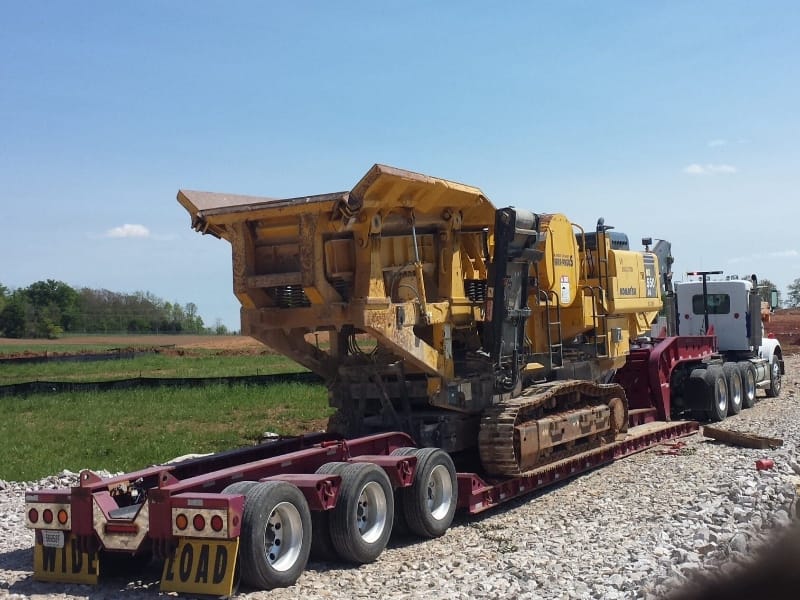
Construction projects rely on more than labor and planning. They also rely on excavators, skid steers, loaders, lifts, and other machines that need to be moved with care between sites, shops, and storage yards. When one piece of equipment is out of place, the whole workday can start to slip.
Agriculture works on a tight calendar, and that calendar does not pause for transport problems. Tractors, sprayers, and other large machines often need to move between farms, repair locations, and work areas in a way that respects both the machine and the road. That is one reason equipment towing supports more than one type of customer across the region.
Construction Depends on Timing
A construction site has its own pace, and equipment has to match it. If a machine breaks down or needs relocation, crews need a clear plan for getting it moved without creating extra disruption. Towing heavy machinery helps keep that process organized so contractors can focus on the job in front of them.
Agriculture Depends on Access
Farm work follows the season, the weather, and the condition of the land. Equipment often needs to travel between fields, barns, service locations, and neighboring properties, and those moves take planning. Russellville heavy equipment towing helps make those transfers more manageable for agricultural operations that already have enough on their plate.
Local Industry Depends on Steady Support
Manufacturing, warehousing, and commercial operations all rely on equipment in some form. A forklift, compact loader, or other large machine may need transport after a breakdown, during a site change, or before repairs begin. Russellville heavy equipment towing gives local businesses a way to move that equipment without adding more strain to a busy workweek.
A few ways heavy equipment towing supports local operations include:
- moving machinery between job sites
- transporting disabled equipment to repair facilities
- helping contractors keep schedules on track
- assisting farms during busy seasonal periods
- reducing downtime for commercial properties
Jones Bros. Towing and the Value of Russellville Heavy Equipment Towing
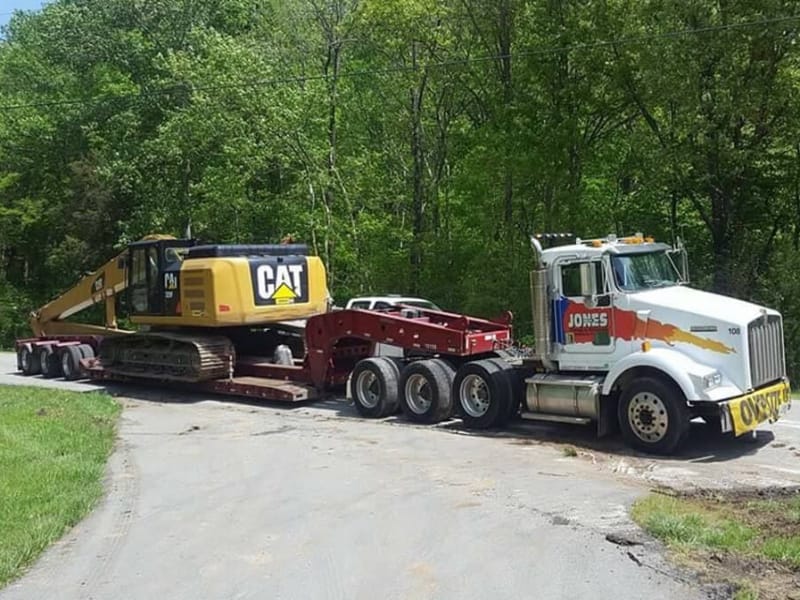
At Jones Bros. Towing, we see how much local work depends on reliable equipment movement. Russellville heavy equipment towing supports construction crews trying to stay on schedule, farm operations working through narrow seasonal windows, and businesses that need equipment moved for repairs, delivery, or relocation. We take that role seriously because every piece of machinery usually connects to a larger job, a larger deadline, and a larger investment of time.
We also know the work is never only about the machine itself. Russellville heavy equipment towing helps local contractors stay productive, helps agricultural operations keep moving, and helps businesses avoid longer interruptions than necessary. At Jones Bros. Towing, we provide Russellville heavy equipment towing with a focus on careful handling, clear communication, and dependable service for the industries that keep Russellville working every day.
FAQ
What types of equipment usually require towing services?
Many types of machinery require professional transport when they cannot travel on public roads or when mechanical issues arise. This often includes excavators, skid steers, tractors, loaders, forklifts, and compact construction machines. Moving these machines requires planning and the right type of transport vehicle to handle their size and weight.
Why can’t heavy machinery simply be driven from place to place?
Large machines often move slowly and may not meet road safety requirements for longer travel. Tires, tracks, and mechanical components can wear down quickly during long drives on pavement. Transporting equipment helps prevent unnecessary wear while also keeping roadways safer for other drivers.
When do businesses typically need equipment transport services?
Companies may need equipment moved for several reasons. A machine might need repairs at a shop, a contractor may need equipment delivered to a new project, or a farm may require machinery relocated between properties. Equipment transport helps keep work schedules organized and reduces downtime.
How is heavy equipment secured during transport?
Before transport begins, operators inspect the machine and confirm weight distribution. The equipment is then positioned carefully on the transport vehicle and secured using chains and binders designed for large loads. This process keeps the machine stable during travel.
What factors determine how equipment is transported?
Several factors influence how a machine is moved. These include its size, weight, shape, and ground clearance. The distance of travel and road conditions also play a role in selecting the right transport method.
How can equipment transport help reduce downtime for businesses?
When equipment cannot operate or needs relocation, projects can slow down quickly. Professional transport allows businesses to move machinery to repair facilities or new work sites without delaying operations longer than necessary. This helps crews return to work sooner and keeps projects progressing.