
Think Towing Capacity Is Just a Sticker on the Door? Think Again
Towing capacity isn’t just a number stamped on a spec sheet, it’s the invisible line between control and chaos. Crossing that line can quickly cause a trailer that sways like a pendulum, a transmission that gives up halfway through the haul, or brakes that just can’t keep up. If you think towing is only about hooking up and hitting the road, you’re setting yourself up for trouble. In our work with Hopkinsville heavy recovery, we’ve seen too many loads go sideways—literally—because someone didn’t take towing capacity seriously.
What Happens When the Numbers Don’t Add Up
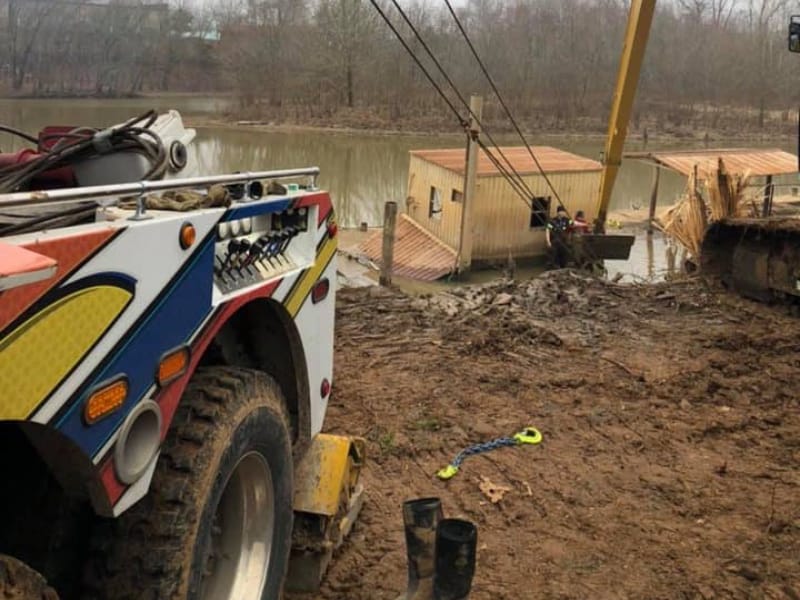
When someone miscalculates towing capacity, it usually ends in a call to us. And by then, the damage is already done. We’ve pulled trailers off guardrails, rescued rigs from ravines, and cleared box trucks stuck in the median. It happens more often than you’d think. One bad judgment call, and now you’re dealing with frame damage, burnt brakes, or worse—someone hurt on the side of the road.
Here’s how the math breaks down in real-world situations:
- Someone hauls a 12,000 lb. trailer with a 10,000 lb. rated truck, figuring “close enough.”
- A fully loaded flatbed pushes a single rear axle truck way past its limit.
- A driver forgets to factor in passenger and cargo weight, not just the trailer.
Know Your Limits Before the Hook-Up
Understanding your vehicle’s true towing capacity means looking beyond what the dealer told you or what you read online. It involves knowing the gross combined weight rating (GCWR), tongue weight, payload, and braking power, not just what your hitch says it can take. We’ve worked on enough Hopkinsville heavy recovery calls to know that ignoring these numbers doesn’t just strain your truck, but can shut down traffic or total an entire rig.
The Four Numbers You Should Never Ignore:
• Towing Capacity – The max weight your vehicle can pull, period.
• Payload – The weight inside the truck, including passengers and cargo.
• Tongue Weight – The pressure pushing down on your hitch (should be 10-15% of the trailer’s weight).
• GCWR – The total weight of your vehicle, trailer, passengers, and cargo combined.
Mess any of those up, and you’re headed for trouble. And maybe a call for Hopkinsville heavy recovery.
Why It Feels Like Guesswork and Why It Shouldn’t
Too often, we hear people say, “Well, I’ve towed heavier before and it was fine.” That’s the problem. It was fine. Until it wasn’t. Just because you made it down the highway once doesn’t mean your setup is safe, legal, or reliable. Bridges collapse under stress over time, not all at once. So do axles and transmissions.
When the Load Is Big, the Recovery Gets Bigger
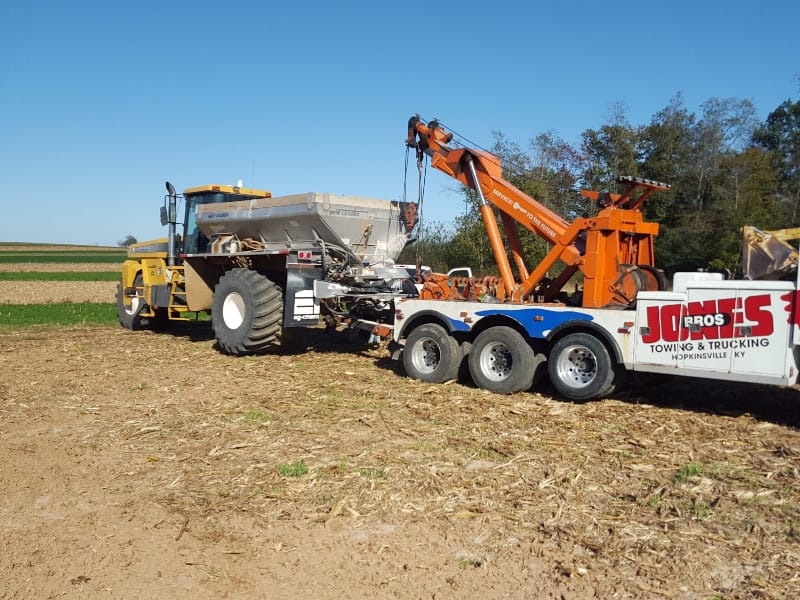
In Hopkinsville heavy recovery, the mistakes are heavier, and the recoveries more dangerous. We’re not just hauling out pickups and trailers, we’re talking semi wrecks, overturned box trucks, agricultural machinery that slid off soft shoulders. When these units fail, they take out power lines, block highways, and sometimes shut down entire intersections. And most of the time, it starts with someone asking too much of a vehicle.
Here’s what we look at during every recovery:
- Axle damage or frame bends from overloaded hauls
- Trailer disconnection from weak or mismatched hitches
- Burnt-out transmissions from exceeding GCWR
- Brake system failure from overloading downhill hauls
By the time we’re on scene, the only thing left to do is stabilize and extract. We’d much rather you never need us in the first place, but when you do, we’re ready.
Towing Capacity FAQ
1. Why isn’t the towing capacity on the sticker the whole story?
The factory-rated towing number assumes a nearly empty truck. Add passengers, tools, cargo, or aftermarket gear and you start eating into the available towing power.
2. What happens if I tow more than my truck is rated for?
You risk:
- Overheated or failed transmissions
- Stressed axles and frames that can bend or crack
- Trailer sway that can pull you off-line
- Brake fade or total brake loss on long grades
Most breakdowns don’t happen on the first mile — stress builds up until one component gives way, often at highway speed.
3. How do I figure out my true towing limit?
You need to know all four numbers:
- Towing capacity: max weight the vehicle can pull
- Payload: weight in the truck (passengers, cargo, fuel)
- GCWR: gross combined weight rating — the limit for truck + trailer + payload together
- Tongue weight: downward pressure on the hitch (ideally 10–15% of trailer weight)
GCWR – (truck weight + payload) = how much trailer you can really tow.
4. Why do payload and tongue weight matter so much?
A truck can hit its payload limit long before reaching the advertised tow rating. Too little tongue weight leads to sway; too much overloads the rear axle and lightens steering control. Both increase crash risk.
5. I’ve towed heavier before without trouble. Why is it still risky?
Because every trip adds wear. Metal fatigue, brake heat, and stress on the driveline accumulate until something fails — often under heavier loads or in emergency braking. Surviving a few trips over-capacity doesn’t make it safe.
6. What mistakes lead to the worst heavy-recovery calls in Hopkinsville and Clarksville?
- Ignoring GCWR and assuming the truck “can handle it”
- Forgetting to count passengers, tools, or bed cargo in the math
- Using a mismatched or underrated hitch
- Overloading flatbeds or farm trailers for short hauls
- Skipping brake upgrades or trailer brake checks
7. How do steep hills and rural backroads affect safe towing weight?
Climbs overwork the engine and transmission; downhill grades overheat brakes. Unpaved or soft shoulders shift more weight to one side, stressing axles and suspension. Local conditions often lower the safe working limit below the published rating.
8. Can overloading affect my insurance or liability in a crash?
Yes. If the investigation shows the tow setup exceeded rated limits, it may count as negligence, which can affect claims and liability. Safe math isn’t just mechanical — it’s legal protection.
9. What should I do if my overloaded setup breaks down or causes an accident?
Stay clear of traffic, use hazard lights, and call a professional recovery crew. Jones Bros. Towing responds 24/7 in Hopkinsville to stabilize, recover, and clear the scene safely.
10. Why trust Jones Bros. Towing for heavy recovery?
Because we’ve handled everything from jackknifed semis on I-24 to farm machinery that slid into ditches.
We bring a safety-first approach that minimizes further damage and traffic disruption, heavy-duty wreckers and rotators, operators trained in weight-distribution and recovery math, as well as local road knowledge for rural routes and tight access points
Jones Bros. Towing Handles Hopkinsville Heavy Recovery Like No One Else
At Jones Bros. Towing, we’ve built our name on showing up when others can’t. Hopkinsville heavy recovery is all about getting big rigs, buses, machinery, and overloaded trailers back upright and off the road. We know the roads around Hopkinsville, and we know the weight limits they can handle.
If you’ve underestimated your towing setup or pushed your truck beyond its limit, you’re not alone. It happens more than most admit. But you don’t have to let it turn into a full-blown disaster. Call us before things go wrong or when they already have. We’re here with the muscle, the gear, and the experience to handle whatever went sideways.
Just don’t treat towing capacity like a suggestion. Trust us: after enough Hopkinsville heavy recovery calls, we’ve learned it’s one rule you don’t want to break.