

After the Pop
A steer tire lets go at 68 mph just south of Plainview, and the driver has about two seconds to make a good choice. Semi incidents an easily scatter across both lanes and semi tire blowouts are no exception. Drivers then shove a tractor toward the shoulder and leave a loaded trailer sitting crooked with cars stacking up behind it. That is a usual scenario where I-27 semi towing starts for us, with traffic moving fast. And very little room for our tow truck team to do their work. But we’d never shy away from a towing challenge.
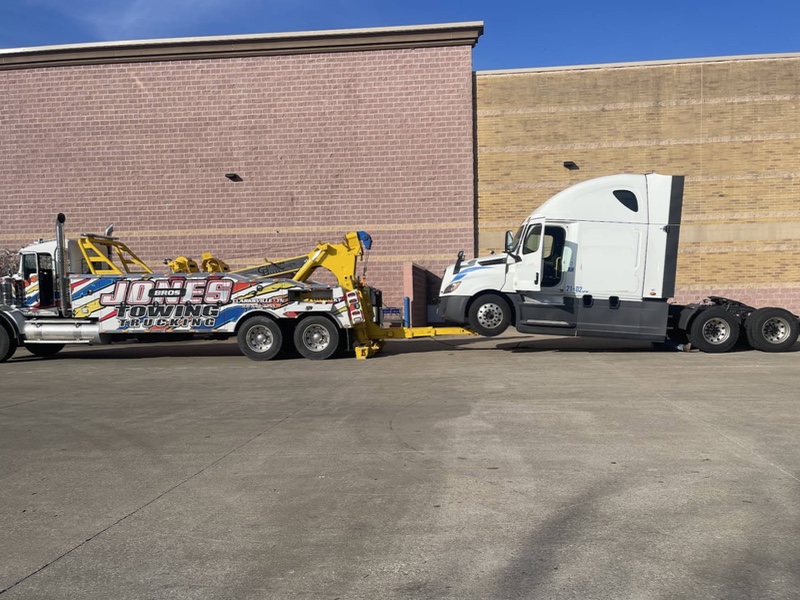
Why Semi Tires Go Boom
Heat is a big one. That stretch of highway can cook tires for hours, especially in summer when the pavement feels soft by midafternoon. A tire that was already low in air back at the yard can build heat until the sidewall finally gives up.
Sometimes the driver never feels anything strange until… there it is… bang!
We also see damage from road debris, old casing, overloaded trailers, bad valve stems, and tires that were run way too long after a puncture. A recap can fail too, but we do not blame every strip of rubber on recaps. Plenty of good tires fail because they were:
- Underinflated
- Mismatched
- Ignored during a rushed pre-trip
Treading Carefully: What the Driver Should Do Right Away
The first move is to keep the wheel steady and avoid stabbing the brakes. A hard brake can pull the rig harder, especially if it is a steer tire. Ease off the throttle, let the truck slow down, and work toward the shoulder only when the trailer is staying in line. Four-way flashers on early. That should do it. Once stopped, the driver needs distance from traffic! Getting warning triangles out as soon as it is safe, checking for fire or fuel leaks, and staying out of the travel lane.
What NOT to Do
A lot of trouble starts after the truck is already stopped. We have pulled rigs where the driver tried to limp another mile on a shredded tire and tore up air lines, mudflaps, fenders, and wiring. That can turn a tire service call into I-27 semi towing because the truck can no longer move under its own power.
Here are a few things our I-27 semi towing team tells drivers not to do after a highway blowout:
- Do not crawl along the shoulder with rubber beating the truck apart.
- Do not stop on a bridge or blind curve unless the truck will not go farther.
- Do not stand between the tractor and trailer while traffic is passing close.
- Do not let anyone pull pieces of tread from under the truck without checking air lines first.
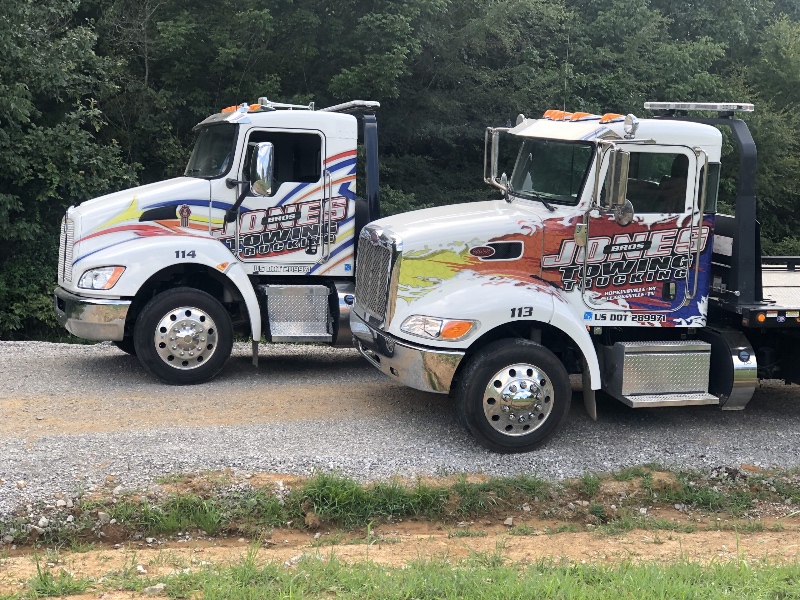
Jones Bros. Towing Handles I-27 Semi Towing When the Rubber Leaves the Road
At Jones Bros. Towing, we handle I-27 semi towing for tire blowouts, disabled tractors, damaged trailers, and trucks that cannot keep moving after a tire failure. These calls are rarely neat. Rubber wraps around axles, brake chambers get hit, airlines rip loose, and sometimes the driver is stuck between staying put and blocking a lane.
We look at the truck first, not just the tire. If I-27 semi towing is needed, our I-27 semi towing team plans the hookup around the load, the shoulder, and the traffic pattern.
If a tire service can handle it, we are fine saying so. We see enough blowouts along I-27, especially in hot weather and heavy crosswinds, to know that the smallest mistake after the tire pops can become the most expensive part of the day.
FAQs
What should a truck driver do first after a tire blows out?
Hold the wheel steady and avoid a hard brake. Let the truck slow down as much as you can before moving toward the shoulder. Turn on the flashers early so nearby drivers have time to react.
Is it safe to keep driving after a semi tire blows?
Usually, no. Even a short distance can tear up brake lines, mudflaps, wiring, or the trailer body. Stop in the safest reachable spot and check the damage from away from traffic.
Why do semi tires fail even when they look fine?
A tire can look normal and still be low on air, overheated, or damaged inside the casing. Small punctures, old sidewalls, heavy loads, and long hot runs can all lead to failure. The outside does not always tell the whole story.
Can a blown trailer tire damage the cargo?
Yes, depending on the load and how violent the failure is. A shredded tire can shake the trailer, damage suspension parts, or make the driver stop harder than planned. Fragile freight needs a closer look afterward.
Should drivers remove loose tire tread themselves?
Only if they can do it well away from traffic and without crawling under the truck. Loose tread can be wrapped around lines or suspension parts. Pulling it the wrong way can cause more damage.
How can fleets reduce highway tire blowouts?
Check tire pressure often, not just tread depth. Look for cuts, sidewall bubbles, uneven wear, and valve stem leaks during inspections. Replace questionable tires before a long haul, especially in hot weather.