

What Sitting Still Actually Does
If you’re thinking a car can sit indefinitely, you may need to think again. Even if your vehicle is safe and sound, tucked away in a driveway or covered garage, damage builds quietly beneath the surface. Invisible until the driver returns expecting the car to operate exactly as it did before. As a tow truck company, that responds regularly to Dover towing calls, we see the same problems repeat themselves with a consistency that makes the pattern easy to describe.
The challenge is that a vehicle does not announce trouble while it is sitting still. It waits. By the time the owner turns the key, the battery may be dead, the tires deflated, the brakes rusted, and the fuel degraded. All of those problems came from disuse, not from anything the car did on the road.
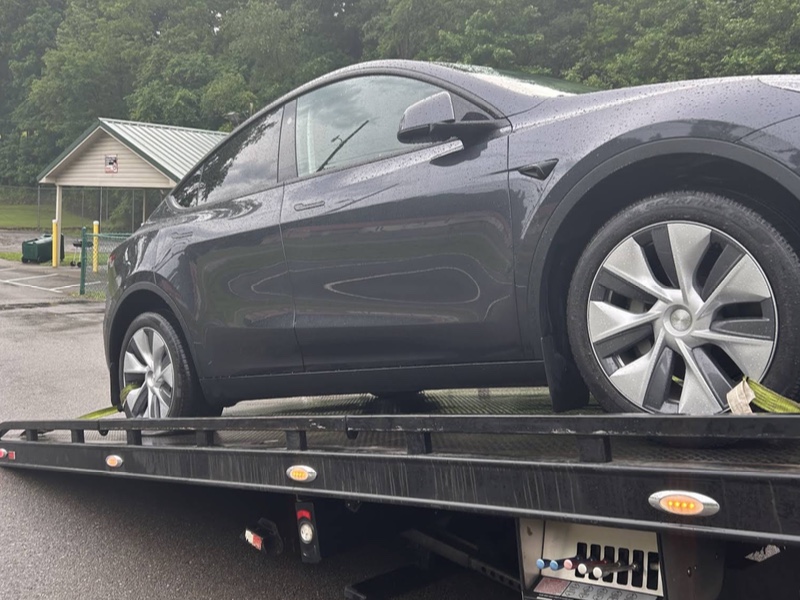
The Systems That Feel It First
Batteries are among the first components to register the effects of disuse. Most standard batteries begin losing their charge after a few weeks without use, and vehicles with active clocks, security systems, or computers create small but steady drains that accelerate the process. A battery that fully discharges even once is often permanently reduced in capacity, and the problem compounds with each storage period.
Gasoline degrades faster than many drivers expect. Modern fuel blends, particularly those containing ethanol, can begin to lose volatility and absorb moisture within 30 to 45 days, potentially leading to varnish and gum deposits in fuel system components over extended amounts of time.
Tires also lose pressure. Steadily and gradually, typically around one to two PSI per month. If your car sits longer, it may develop temporary or permanent flat spots when left in the same position.
Time, Conditions, and the Point of No Easy Return
How Long Before Damage Sets In
Two to three weeks is generally safe for most vehicles with little or no special preparation. After four to six weeks, battery drain and tire pressure loss become more likely. After three months, fuel quality, dry seals, and surface rust on brake rotors can start to become concerns. After six months, a vehicle stored without preparation may need more than a simple restart, and a Dover towing call to our team becomes more likely.
Environmental Factors That Speed Things Up
Heat drains batteries and accelerates fluid evaporation, while cold stiffens rubber seals and reduces battery performance. High humidity promotes rust on brake rotors, exposed metal, and electrical contacts.
UV exposure degrades rubber hoses, belts, and gaskets over time. Our Dover towing responses track these seasonal patterns closely.
What to Do Before and After Extended Storage
Before parking long-term, fill the fuel tank and add stabilizer, connect a battery tender, check all fluid levels, and inflate tires to the upper end of their specified range. After a long storage period, inspect every vehicle component that sat idle: brakes, tires, fluids, battery state, and any rubber that shows signs of cracking or stiffness. A few minutes on that inspection prevents the kind of surprise that ends with a call for help.
The Dover towing calls we see most often trace back to vehicles stored without addressing these steps:
- Fill the fuel tank and add a stabilizer to slow the degradation process
- Connect a battery tender or trickle charger to prevent full discharge
- Check and top off all fluids, including oil, coolant, and brake fluid
- Inflate tires to the upper recommended range to account for natural pressure loss
- Move the vehicle a short distance every few weeks if storage conditions allow
Jones Bros. Towing: Dover Towing Experience That Has Seen It All
Jones Bros. Towing and Trucking has been serving the region since 1975, and our Dover towing fleet of 13 wreckers and 9 rollbacks is prepared for the full range of what a stored or immobile vehicle requires. From a dead battery in a residential driveway to a commercial vehicle that has not moved in months, our team arrives with the equipment and experience to assess and recover whatever the situation calls for.
A Dover towing call that traces back to long-term storage is a job our operators handle regularly and know well. We cover 48 states, run around the clock, and carry a rotator, RGNs, rolloff containers, and specialized trailers for any load or condition. Jones Bros. has delivered on the principle that service is the key to the future one call at a time since 1975. Call us when the car that was fine last season is not cooperating today.
FAQ
How long can a car sit before it really needs special preparation for storage?
Most vehicles are fine for two to three weeks with no intervention. Beyond that, tire pressure loss and battery drain become increasingly likely. Beyond six to eight weeks, fuel degradation and rubber drying add to the list of concerns. Anything approaching three months should be treated as a full storage event with proper preparation.
What is a fuel stabilizer and what does it actually do?
Fuel stabilizer is an additive that slows the chemical breakdown of gasoline during storage. It is most effective when added to a full tank, which also reduces the amount of air and moisture in contact with the fuel. It does not stop degradation entirely but can extend the usable life of stored fuel by several months.
Can a flat-spotted tire recover on its own once driving resumes?
Sometimes. Mild flat spots from a few weeks of storage often smooth out after driving at normal speeds for a short period. Severe flat spots from months of storage may not resolve fully, particularly in colder climates where rubber hardens. If vibration at highway speed persists after a hundred miles of driving, the tire likely needs replacement.
What is the difference between a battery tender and a trickle charger?
A battery tender monitors the battery’s state and cycles on and off to maintain it without overcharging. A trickle charger applies a constant low current regardless of the battery’s state. For extended storage, a battery tender is the better option because it will not damage the battery through overcurrent over time.
Does starting a stored car and letting it idle for a few minutes help?
Less than most people assume. Idling does not charge the battery efficiently and does not bring the engine or transmission to full operating temperature. A short idle may actually do more harm than good by introducing moisture into the exhaust without burning it off. A real drive that brings all systems to operating temperature is significantly more beneficial.
What happens to engine oil that has been sitting unused for several months?
Oil settles and its additive package degrades over time without the circulation and heat that normal driving provides. The oil itself does not evaporate, but its ability to protect metal surfaces diminishes. A vehicle stored for three months or more without being driven should have its oil changed before returning to regular use, regardless of mileage.