

The Interstate Changes What Every Recovery Requires
A surface street accident scene can usually be controlled: traffic redirected, lanes blocked off, the surrounding area cleared. On an interstate, the same crash plays out inside a live traffic corridor that does not stop. An I-169 accident recovery begins under conditions that a standard tow call never faces. The preparation that goes into answering that call reflects it.
The difference is not just speed. Shoulder width, lane proximity, and approach geometry shape how an operator handles the scene. So does the ongoing movement of traffic past the work area. All of it gets planned before the truck moves.
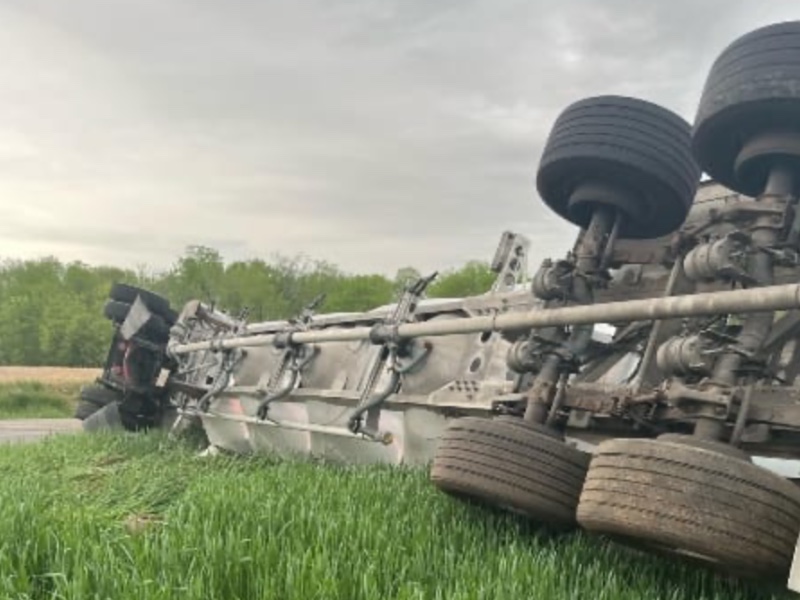
Six Things That Change When a Crash Happens on the Highway
A highway crash brings conditions absent from a surface street call. The responding team accounts for all of them before the truck leaves the yard:
- Active traffic traveling at speed passes within feet of the scene throughout the entire recovery operation
- The road cannot be fully closed, so all work proceeds in a live lane environment with partial control only
- All equipment must enter and exit from the shoulder, which fixes the approach angle and limits positioning options
- High-speed impact debris fields extend farther and require wider scene clearance before any vehicle is loaded
- Law enforcement coordinates multiple travel lanes, onramps, and overpass entries simultaneously
- The condition assessment must account for high-speed impact forces across every system in the vehicle
How We Set Up for a Highway Recovery
Traffic Management Before We Touch the Vehicle
On a highway, establishing a safe perimeter comes before any operator approaches the vehicle on foot. Cones, truck positioning, and signals go out first to separate the work zone from live traffic. A structured traffic management setup reduces risk for the recovery team and every passing driver.
Approach Geometry and the Shoulder Limitation
A standard tow can reposition the truck freely around the vehicle. On a shoulder, the approach angle is fixed by road geometry and the vehicle’s position. Our operators plan the rigging and loading method before the truck is parked, working within what the shoulder layout allows. On an I-169 accident recovery, the operator adapts the recovery to the geometry, not the other way around.
Reading the Vehicle After a High-Speed Impact
The vehicle in a highway crash often shows frame deflection, compressed crumple zones, and load-bearing components out of position. An I-169 accident recovery operator reads that damage before any attachment is made. Loading from the wrong point on a structurally compromised vehicle causes new damage during transport. Every I-169 accident recovery we handle starts with that walk-around.
Jones Bros.: Building an I-169 Accident Recovery Fleet Since 1975
Ronnie Jones and his brother founded Jones Bros. Towing in 1975 with a single wrecker. Our fleet has grown to several rollbacks, multiple wreckers, specialized trailers, and a state-of-the-art rotator. That means we at Jones Bros. are ready for any I-169 accident recovery call, any hour of the day or night.
Our founder believed service is the key to the future. Every I-169 accident recovery call we respond to reflects that standard: fast response, right equipment, scene cleared correctly. We cover local and long-distance work across 48 states from Hopkinsville and Clarksville. Just give us a call. Any time.
FAQ
What makes a highway accident different from a crash on a local road?
On a highway, active traffic continues passing the scene throughout the recovery. There is no option to fully close the road or freely reposition equipment around the vehicle. The work zone must be established and maintained on the shoulder with live lanes adjacent, which changes how every step of the recovery is approached.
How does a tow operator manage the risk of passing traffic at a highway accident?
Operators establish a cone and truck perimeter to protect the work zone before approaching the vehicle. Truck positioning, emergency lighting, and visible markings separate the recovery area from travel lanes. The setup process takes priority before any assessment of the vehicle begins.
Does a vehicle’s condition after a high-speed crash affect how it can be towed?
Yes. High-speed impacts often compromise frame rails, suspension points, and structural load paths in ways that lower-speed crashes do not. An operator trained in accident recovery assesses the vehicle before deciding how to rig and load it. Attaching from a compromised structural point can cause additional damage during the tow.
What is a rotator and how is it used in accident recovery?
A rotator wrecker can swing its boom 360 degrees and lift vehicles from a range of positions without moving the truck. On a highway shoulder, this capability is critical because the operator cannot freely reposition around the vehicle. A rotator handles complex lifts, overturned vehicles, and recoveries where a conventional winch approach is not possible.
Can I request where my vehicle goes after a highway accident recovery?
In most cases, yes. The vehicle owner generally has the right to designate the tow destination within a reasonable distance. If law enforcement directs vehicles to a rotation yard, the vehicle can usually be moved from there once the situation is resolved. State clearly to the dispatcher at the time of the call where you want the vehicle taken.
How long does a highway accident recovery typically take compared to a surface street call?
Recovery time on a highway depends on scene complexity, number of vehicles, and road conditions. The setup and clearance process is generally longer than a surface street call because traffic management, approach limitations, and multi-vehicle coordination all add steps. A well-equipped team with highway recovery experience moves through those steps faster than one that handles only standard tows.